Best Bait for Beginner Anglers
Best Bait for Beginner Anglers Picking the right bait is one of the most important decisions a beginner angler will ever make. You can have the best fishing rod, the strongest line, and the perfect location—but if your bait choice is wrong, fish simply won’t bite.
BAIT & TACKLE
Dr Shamim
12/6/20254 min read
Best Bait for Beginner Anglers
Picking the right bait is one of the most important decisions a beginner angler will ever make. You can have the best fishing rod, the strongest line, and the perfect location—but if your bait choice is wrong, fish simply won’t bite.
The good news is this:
Beginners do not need complicated or expensive bait to catch fish.
In fact, some of the simplest baits are the most effective, especially when you’re just starting out. This guide breaks everything down in a clear, beginner-friendly way so you can confidently choose the right bait, catch more fish, and enjoy your time on the water.
Why Bait Choice Matters So Much for Beginners
Fish eat for survival. They are attracted to:
Natural smell
Familiar movement
Easy meals
Food that matches what’s already in the water
As a beginner, your goal is not to outsmart the fish.
Your goal is to feed them something they already want.
Choosing the right bait helps you:
Get more bites
Avoid frustration
Learn faster
Build confidence
Catch your first fish sooner
Two Main Types of Fishing Bait
All fishing bait falls into two categories:
1. Live (Natural) Bait
2. Artificial (Fake) Bait / Lures
As a beginner, you should start with live bait, then slowly move to artificial bait once you’re comfortable.
1. Live Bait – The Best Choice for Beginners
Live bait works because it smells, moves, and feels natural to fish. It catches fish even when they are not aggressive or actively feeding.
✅ Why live bait is perfect for beginners
Fish recognize it instantly
Minimal technique needed
Works in almost all waters
Ideal for lakes, ponds, rivers, and piers
Let’s look at the best live baits for beginner anglers.
Worms – The #1 Beginner Bait
If you remember only one bait from this article, remember this:
Worms are the most reliable fishing bait in the world.
Why worms work so well:
Most freshwater fish eat them
Natural movement underwater
Strong scent
Easy to hook
Extremely affordable
Best fish caught with worms:
Bluegill
Sunfish
Crappie
Bass
Trout
Catfish
How beginners should use worms:
Use small hooks (size 6–10)
Thread part of the worm onto the hook
Let some of the worm hang loose for movement
Fish with a bobber in shallow water
Worms are forgiving. Even if your setup isn’t perfect, fish will still bite.
Minnows – Excellent for Catching Bigger Fish
Minnows are small baitfish and work best for anglers ready to step slightly beyond the basics.
Why minnows are effective:
Natural prey for many fish
Strong swimming action
Attracts larger fish
Best fish caught with minnows:
Bass
Crappie
Walleye
Perch
Pike
Beginner tips for using minnows:
Keep them alive in an aerated container
Hook through the lips or back
Use a small sinker, not too heavy
Fish slowly
Minnows require a little more care than worms but are very effective when fish are feeding aggressively.
Crickets – Simple and Effective in Warm Weather
Crickets are a great beginner bait, especially in warmer months.
Why crickets work:
Natural insects fall into water
High protein for fish
Easy to handle
Best fish for crickets:
Bluegill
Sunfish
Perch
How to use crickets:
Hook lightly through the back
Let them move naturally
Fish near the surface with a bobber
Crickets are especially good for kids and first-time anglers.
Corn – Surprisingly Effective and Beginner-Friendly
Yes—corn really works.
Why corn is great for beginners:
Cheap and easy to find
Simple to use
Clean handling
No smell or mess
Fish that love corn:
Carp
Bluegill
Trout
Catfish (sometimes)
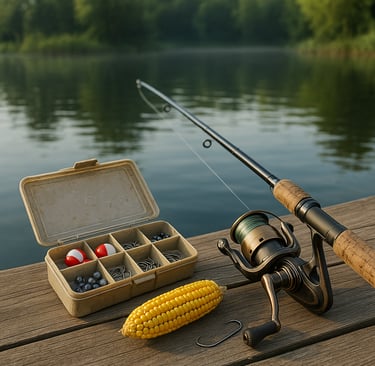
Thread 2–3 kernels onto a small hook and fish in calm water.
Dough Bait – Easy and Ready-to-Use
Dough bait is designed specifically for attracting fish, especially stocked fish.
Why beginners like dough bait:
No preparation needed
Strong scent
Stays on the hook
Best for:
Trout
Catfish
Pond fishing
Pinch off a small piece and mold it around the hook. Simple and effective.
2. Artificial Bait (Lures) – When Beginners Should Try Them
Artificial bait does not smell like food but imitates movement.
Beginners should not rely only on lures at first, but they are still useful.
Soft Plastic Worms – Best Artificial Bait for Beginners
If you choose one artificial bait, make it this.
Why soft plastics work:
Mimic worms or small fish
Affordable
Easy to rig
Extremely versatile
How beginners should use them:
Use jig heads (1/16 – 1/8 oz)
Fish slowly
Let them sink and lightly twitch
Soft plastics help beginners learn patience and control.
Spinner Lures – Simple Movement Attracts Fish
Spinner lures flash and vibrate in the water, drawing attention.
Good for beginners because:
Easy to retrieve
Fish bite out of reaction
Works in many water conditions
Fish commonly caught:
Bass
Trout
Perch
Cast, reel slowly, and let the spinner do the work.
When to Use Live Bait vs Artificial Bait
Use live bait when:
You’re new
Fish are not active
Water is calm
You want guaranteed bites
Use artificial bait when:
Fish are feeding aggressively
Water is moving
You want less mess
You’re practicing technique
Most beginners catch more fish using live bait first.
Best Beginner Bait by Fishing Location
Ponds & Small Lakes
Worms
Corn
Small soft plastics
Rivers
Worms
Minnows
Jigs
Fishing Piers
Worms
Shrimp pieces
Dough bait
Trout Areas
Worms
Corn
Dough bait
Common Beginner Mistakes With Bait
Avoid these mistakes to catch more fish faster:
❌ Using bait that’s too big
❌ Changing bait too often
❌ Fishing too fast
❌ Ignoring local fish species
❌ Not matching hook size to bait
Simple bait + small hook = more bites.
How Much Bait Should Beginners Bring?
More than you think.
Beginner rule:
Extra worms
Extra hooks
Backup bait option
Bait gets lost, stolen by fish, or falls off hooks. Being prepared keeps fishing fun.
Storage Tips for Beginner Bait
Keep worms shaded and cool
Store corn in a sealed container
Keep dough bait airtight
Keep live bait alive with water changes
Never leave bait in the sun
Proper storage makes bait last longer and work better.
Final Thoughts: Keep It Simple
Fishing success for beginners does not come from fancy bait.
It comes from:
Choosing natural food
Using small hooks
Fishing patiently
Letting the bait do the work
If you start with worms, corn, or dough bait, you are already ahead of most beginners.
Master these basics first—and the fish will come.